Five Acquisitions Later: Mapping the Real Technology Debt Behind a Decade of Serial M&A
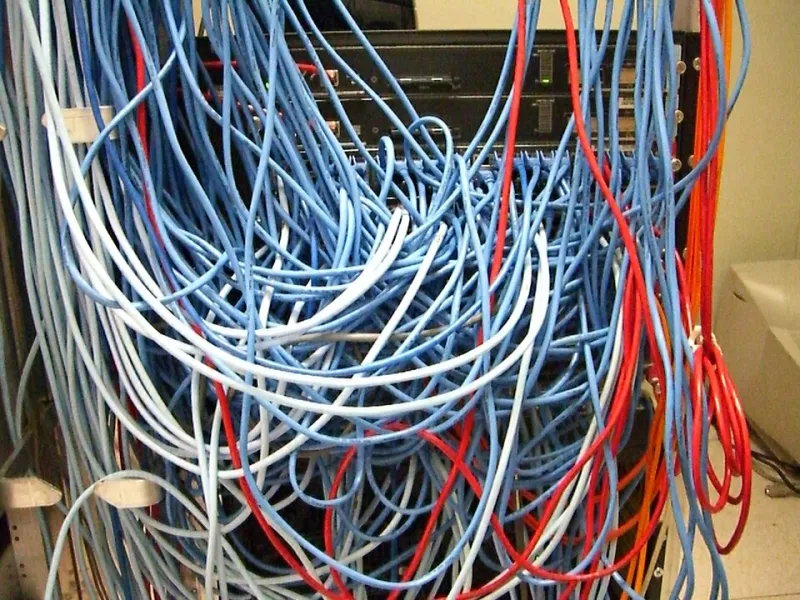
Photo: Kim Scarborough from Chicago, IL, CC BY-SA 2.0, via Wikimedia Commons
Consider a composite but entirely representative mid-market US company — call it a distribution and services firm with roughly $2 billion in revenue. Over ten years, it completed five acquisitions. Each deal closed on schedule, each integration hit its synergy targets on paper, and each one left behind a technology footprint that the next acquisition made worse. By the time the CIO commissioned a full stack audit, the company was running four ERP instances, eleven CRM or ticketing platforms, three payroll systems, and more than 200 SaaS subscriptions — 40 of which duplicated a function already covered elsewhere.
This is the arithmetic of serial M&A that rarely appears in deal models. Integration budgets typically cover finance workstreams, legal entity consolidation, and the first ninety days of HR onboarding. The deep systems work — data model reconciliation, contract renegotiation, identity consolidation — gets deferred, and deferral compounds.
Where the Costs Actually Land
Duplicated licensing. Every acquired company arrives with its own vendor relationships, frequently at worse pricing than the parent could negotiate. In our composite case, overlapping SaaS and infrastructure contracts totaled $6.4 million annually, of which roughly $2.8 million was recoverable through consolidation — but only after eighteen months of contract unwinding, because renewal dates and termination clauses dictated the timeline more than strategy did.
Integration labor. Point-to-point interfaces between the parent and each acquired system multiplied with every deal. The fifth acquisition required connecting to four legacy ERPs, each with custom extract logic maintained by different teams. Integration engineering, which deal models priced at a fixed allocation, in practice consumed a growing share of the IT department's capacity year after year — capacity that was no longer available for new product work.
Data fragmentation. The most expensive cost was also the least visible. Customer records existed in five systems with five definitions of "active account." Reporting required manual reconciliation. Analytics teams spent the majority of their time on data preparation rather than analysis. When the company later pursued AI-driven pricing and demand forecasting, the absence of a unified data foundation — not the absence of models — was the binding constraint.
Security and compliance exposure. Five onboarding processes meant five varying access-control standards. Former employees of an acquisition closed three years earlier still held active credentials in two systems. Audit findings in this area are not hypothetical risks; they arrive on a schedule.
Sequencing the Rationalization
The instinct after a stack audit is to announce a grand unification — one ERP, one CRM, everything migrated. That instinct is usually wrong, and it is the reason so many consolidation programs stall. The more reliable sequence looks like this.
First, stop the bleeding: freeze new system acquisitions, enforce a procurement gate, and consolidate identity and access management across the combined entity. This delivers security improvement quickly and cheaply.
Second, establish the data layer before the application layer. A unified customer and product data model — even one that sits above heterogeneous systems — unlocks reporting, analytics, and eventual AI initiatives without waiting for an ERP migration that may take three years.
Third, consolidate by contract calendar, not by org chart. Map every renewal date across the combined portfolio and let expirations drive the migration sequence. This converts a political battle over which system "wins" into a logistical exercise, and it lets the organization spread cost and change fatigue across manageable increments.
Fourth, retire aggressively. Every system that survives rationalization carries permanent run costs — licenses, interfaces, security reviews, and the specialized staff who understand it. A consolidation program that migrates everything but retires nothing has merely relocated complexity.
The Board-Level Case
For serial acquirers, integration debt should be treated the way acquirers treat deferred maintenance on acquired facilities: as a quantified liability that affects valuation and deal readiness. Companies that maintain a current map of their application portfolio, data flows, and contract obligations can diligence their own readiness before a buyer or lender does it for them.
A decade of acquisitions built this composite company's revenue. Without deliberate stack rationalization, the next decade would have been spent paying rent on the past. The choice, for any growth-by-acquisition enterprise, is not whether to carry integration costs — it is whether to pay them deliberately or let them accrue interest.