Hidden Overhead: How API Proliferation Is Quietly Outspending Your Cloud Infrastructure

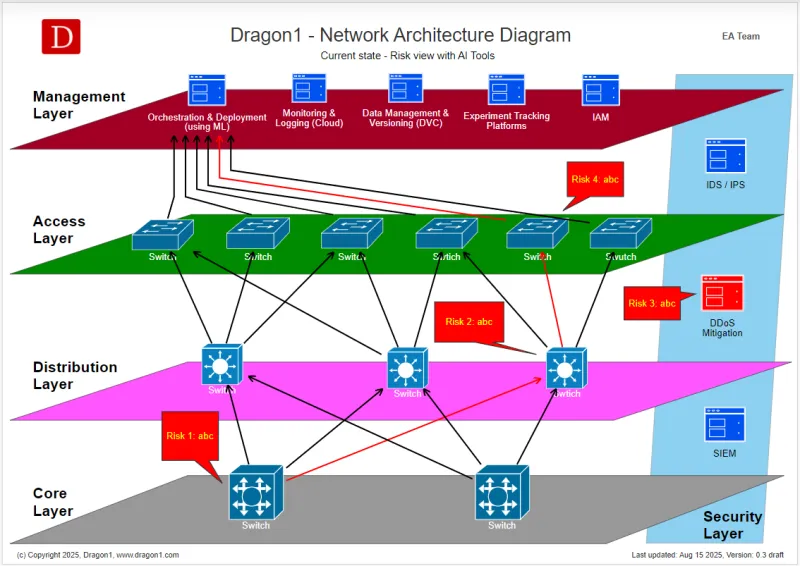
Photo: enterprise API network diagram technology overhead, via www.verifiedmarketreports.com
For much of the past decade, enterprise technology conversations have centered on cloud spend optimization. FinOps teams have matured, reserved instance strategies have been refined, and rightsizing exercises have become routine. Yet a growing number of CIOs and enterprise architects are reporting a disquieting pattern: even as cloud optimization efforts yield measurable savings, total technology operating costs continue to climb. The culprit, in many cases, is not the infrastructure itself—it is the dense, often ungoverned layer of APIs sitting on top of it.
API proliferation has become one of the defining characteristics of the modern enterprise technology environment. As organizations accelerate digital transformation initiatives, integrate third-party platforms, and expose internal capabilities to external partners and customers, the number of active APIs in a typical large enterprise has grown from dozens to hundreds, and in some cases thousands. Each individual API may appear lightweight and inexpensive in isolation. Collectively, they represent a substantial and largely uncalculated operational liability.
The Illusion of the Cheap Interface
The initial cost of deploying an API is deceptively low. A development team can stand up a new endpoint in hours, and the incremental infrastructure cost of doing so is often negligible. This accessibility is precisely what makes API sprawl so difficult to contain. Because no single API appears expensive, the aggregate cost rarely triggers the scrutiny that an equivalent infrastructure investment would demand.
The true cost of an API is not its deployment cost. It is its lifetime cost of ownership—a figure that encompasses versioning, documentation maintenance, security monitoring, dependency management, and the compounding developer productivity loss that occurs when engineers must navigate a fragmented, poorly documented integration landscape.
Consider versioning alone. A mature enterprise API portfolio typically carries multiple active versions of the same interfaces, maintained simultaneously to avoid breaking downstream consumers. Each additional version represents a testing surface, a security patching obligation, and an ongoing documentation burden. When multiplied across hundreds of APIs, the engineering hours consumed by version management become a significant line item—one that rarely appears anywhere on a cloud cost dashboard.
Security Overhead as a Structural Cost
Every API is a potential attack surface. This is not a theoretical concern; it is a documented operational reality. According to research from multiple cybersecurity firms, APIs now represent one of the most targeted entry points for enterprise breaches, a trend that has prompted regulators across industries—from financial services to healthcare—to sharpen their scrutiny of API security posture.
The security overhead associated with a large API portfolio is substantial. Authentication and authorization policies must be maintained and audited. Rate limiting and abuse detection require ongoing tuning. Penetration testing schedules must account for each exposed endpoint. When a new API is added, it does not simply inherit the security posture of the portfolio—it introduces unique risk vectors that must be individually assessed.
For enterprises operating in regulated industries, the compliance dimension of API security adds another layer of cost. Demonstrating that every API in a portfolio adheres to data residency requirements, access control standards, and audit logging obligations requires tooling, process, and dedicated personnel. These are not one-time investments; they are recurring operational expenses that scale with the size of the API estate.
The Developer Productivity Drain
Perhaps the most underappreciated dimension of API cost is its effect on developer productivity. In a well-governed API environment, engineers can discover, understand, and consume internal interfaces quickly. In a sprawling, inconsistently documented ecosystem, the overhead of simply understanding what APIs exist—and which ones are safe to depend on—can consume a meaningful fraction of every sprint.
This friction has measurable consequences. Engineering teams navigating complex, underdocumented API landscapes spend more time in investigation and troubleshooting, less time delivering product value. Onboarding new engineers becomes more difficult, extending the time before new hires contribute effectively. The cognitive load of maintaining awareness of a large, shifting API surface contributes to burnout and attrition—costs that extend well beyond the technology budget.
Enterprises that have attempted to quantify this productivity drag consistently find that the numbers are significant. When the loaded cost of engineering time is applied to the hours lost to API complexity, the figure frequently rivals or exceeds the direct infrastructure spend associated with the same portfolio.
A Framework for Calculating True API Cost of Ownership
Addressing API cost inflation begins with visibility. Most enterprises do not have a complete, accurate inventory of their active APIs, let alone a methodology for calculating the full cost of maintaining them. The following framework provides a starting point for enterprise technology leaders seeking to build a credible cost model.
Step one: Establish a complete API inventory. This means cataloging every active API, including internal service-to-service interfaces, partner-facing integrations, and public-facing endpoints. API gateway logs, service mesh telemetry, and network traffic analysis can each contribute to a complete picture.
Step two: Classify APIs by lifecycle status. Not every API in the inventory is equally active or valuable. Classifying APIs into categories—actively developed, maintained but stable, deprecated but still consumed, and abandoned—creates the foundation for a rational rationalization strategy.
Step three: Assign engineering cost allocations. For each active API, estimate the engineering hours consumed annually by versioning, documentation, security patching, and incident response. Apply fully loaded engineering cost rates to arrive at a per-API annual cost figure.
Step four: Quantify security and compliance overhead. Work with your security and compliance teams to allocate the cost of API-specific security tooling, audit activities, and regulatory reporting across the portfolio.
Step five: Model the productivity impact. Survey engineering teams to estimate the time spent navigating API complexity. Even conservative estimates typically reveal a productivity cost that exceeds direct infrastructure spend.
From Proliferation to Portfolio Management
The goal of this analysis is not to discourage API adoption—APIs remain a foundational capability for enterprise digital strategy. The goal is to reframe how organizations think about API investment. An API is not a free resource. It is a long-lived asset with an ongoing cost of ownership that must be managed with the same discipline applied to any other enterprise technology investment.
Organizations that have implemented formal API portfolio governance—including clear deprecation policies, standardized documentation requirements, and centralized security oversight—consistently report lower operational costs and higher developer satisfaction than those that have allowed proliferation to proceed unchecked.
For enterprise technology leaders, the imperative is clear: the API estate deserves the same rigorous financial and operational scrutiny currently applied to cloud infrastructure. The savings available from rationalizing a sprawling API portfolio are not marginal. In many enterprises, they represent one of the largest untapped opportunities for technology cost optimization currently available.